
Publishing on Amazon KDP is exciting—but it’s also where most authors make their biggest mistakes. Many rush to upload their manuscript without a plan, skipping crucial steps that determine whether their book sells or sinks.
This article is packed with everything you need to know and do before hitting “publish” on your KDP book. We’re going beyond the basics, uncovering the essential strategies that even experienced authors sometimes miss—strategies that separate a book that just sits there from one that takes off.
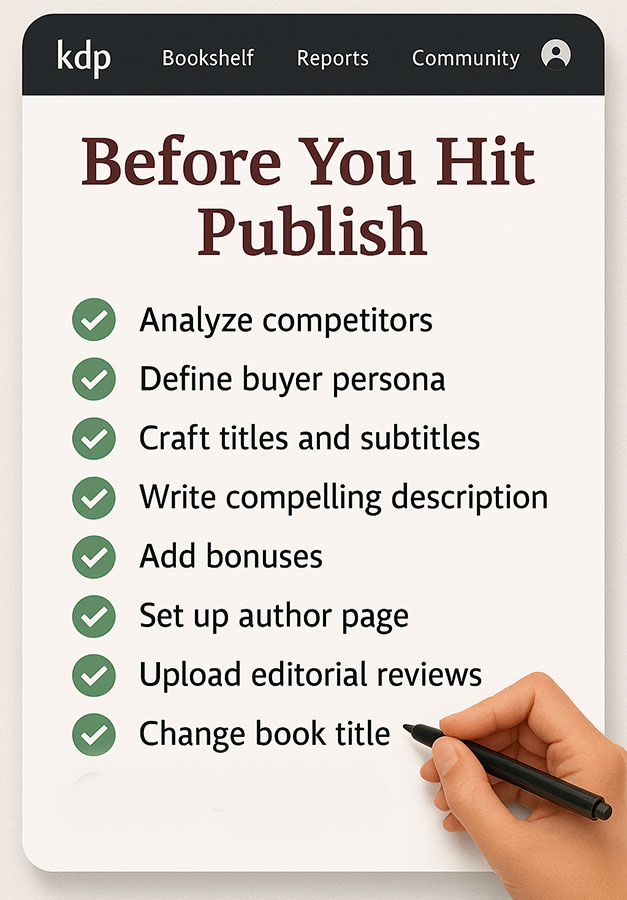
1. Start with Market Research: Know What You’re Up Against
Before you even upload your manuscript, study your competition. Search your main keywords on Amazon and take note of the top-ranking titles. Ask:
-
What do their covers look like?
-
How are they using their subtitles to grab attention?
-
What kind of reviews do they have—and what complaints repeat?
This is your goldmine. If readers keep saying, “I wish this book had more examples” or “too short for the price,” you’ve just identified an opportunity to make your book better.
Look for patterns in pricing, page count, tone, and design. Then use those insights to position your book as a clear improvement on what’s already selling.
2. Define Your Perfect Reader (a.k.a. Buyer Persona)
Your book isn’t for everyone—it’s for someone specific. Before you design a cover or write a single line of description, know who that person is.
Imagine your ideal reader. What’s their age, mood, and motivation for buying your book? Are they looking for comfort, transformation, or entertainment?
When you understand that, everything else—from your title to your tone—falls into place. A reader searching for “how to stop overthinking” wants calm and clarity, not hype. A romance fan picking up a “second-chance love story” expects warmth and emotional payoff.
Write directly to that person, and your conversions will soar.
3. Craft Winning Titles and Subtitles
A strong title sells your book before the reader even clicks. The secret? Combine emotion with clarity.
-
Fiction titles should create curiosity or mood. Think Snowbound at Starbucks for Christmas or The Seven Husbands of Evelyn Hugo.
-
Nonfiction titles should promise transformation. Pair a clear benefit with an emotional hook: Overcoming Overthinking: Break Free from Anxiety and Reclaim Your Life.
Your subtitle is where you boost keyword power. Include your main keyword naturally—like “A Step-by-Step Guide to Self-Publishing Success”—but keep it human.
4. Write Descriptions That Make Readers Click “Buy”
Your description isn’t a summary; it’s sales copy. Lead with emotion, build curiosity, and close with clear benefits.
Structure it like this:
Hook – Grab attention in one or two lines.
Promise – Show what the reader will gain.
Details – Outline key features or takeaways.
Call to Action – End with “Scroll up and buy now” or “Discover how to…”
Use bold text, short paragraphs, and bullet points to make it easy to skim. Readers decide in seconds whether to buy; your job is to keep them reading just long enough to say yes.
5. Add Bonuses to Increase Perceived Value
A small bonus can dramatically increase conversions. Think beyond the book itself:
-
A downloadable workbook or checklist
-
Access to a private readers’ group
-
A free short story or preview of your next title
Bonuses make readers feel they’re getting more for their money, and they also help build your author brand over time.
6. Set Up Your Author Central Page
Your Amazon Author Central page is free, but most authors ignore it. Don’t. It’s your chance to show you’re serious.
Add:
-
A friendly, professional author photo
-
A concise bio with keywords (e.g., “romance author” or “self-help coach”)
-
Links to your social media or website
-
Editorial reviews or blurbs
This small step boosts your visibility and credibility—especially if you plan to publish multiple books.
7. Upload Editorial Reviews and Endorsements
Social proof sells. If you have testimonials from beta readers, reviewers, or influencers, feature them. You can upload editorial reviews directly in your KDP dashboard under “Book Details.”
Even one strong endorsement (“A fresh, funny take on modern love!”) adds weight to your listing.
8. When and How to Change Your Book Title
Sometimes, a great book underperforms simply because of its title. Don’t be afraid to experiment. If you’ve had poor sales for months despite good reviews, consider tweaking your title or subtitle. Track performance before and after the change to measure impact.
9. Working with a Ghostwriter: How to Get What You Want
If you’re outsourcing your writing, the quality of your brief determines the quality of your book. Include:
-
Target reader and tone (e.g., warm and conversational, expert but friendly)
-
Desired word count and structure
-
Sample books you like (for reference)
-
Clear deadlines and communication expectations
A strong brief prevents costly rewrites and ensures the finished product reflects your voice and vision.
10. The Confidence to Publish Like a Pro
These steps might sound like extra work—but they’re exactly what separates successful authors from frustrated ones. Rushing to publish leads to costly mistakes: poor covers, confusing blurbs, and wasted potential.
When you take the time to research, plan, and polish, your book doesn’t just exist on Amazon—it thrives.
Whether you’re preparing your first title or refining your tenth, this checklist gives you the roadmap to publish with confidence—and create a KDP catalog that truly sells.
Ready to take your next step?
If you’re preparing your KDP launch, check out our Book Cover Design Services and Publishing Packages to make your book look as professional as it reads.