
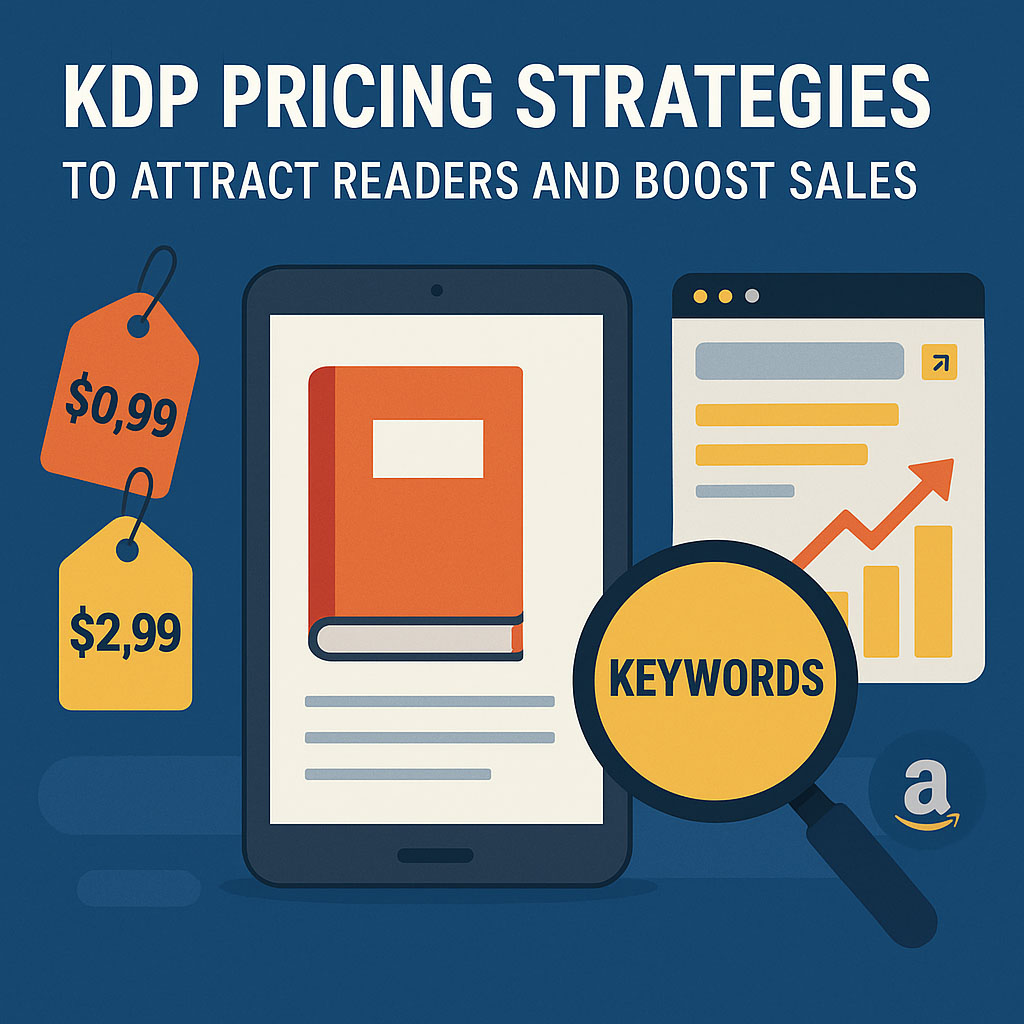
When you publish your first book on Amazon KDP, your pricing strategy can make or break your early success. The right price helps you attract readers, gain momentum in rankings, and set the stage for long-term profitability.
Let’s break down how to strategically price your book, optimize backend keywords, and select categories that maximize visibility — all without spending a cent on ads.
1. How to Set Your Initial Price for Maximum Impact
Start Low to Build Momentum.
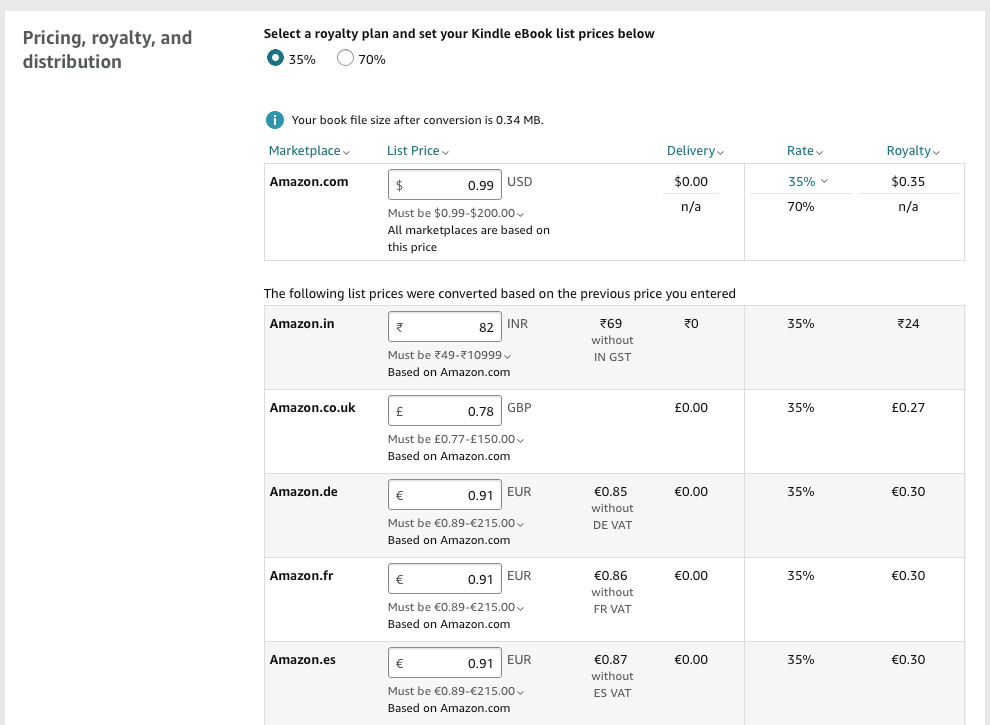
If you’re a new author, pricing your ebook between $0.99 and $2.99 encourages impulse buys. At this range, readers are more likely to take a chance on an unknown author, helping you rack up early downloads and reviews — both of which feed Amazon’s recommendation algorithm.
Use the 70% Royalty Sweet Spot.
For ebooks priced between $2.99 and $9.99, you qualify for a 70% royalty rate. If your genre supports higher perceived value (like nonfiction guides, business books, or detailed romance series), test a price around $3.99–$5.99. It still feels affordable while boosting your profit per sale.
Experiment and Monitor.
Amazon lets you adjust your price anytime. Track your Best Seller Rank (BSR) and page reads (if you’re in Kindle Unlimited) to see how changes affect performance. Even small tweaks — say from $2.99 to $3.49 — can make a measurable difference in conversion.
When you’re setting your price, don’t forget that your cover design also influences whether readers click “Buy.” A strong visual gives your book instant credibility. 👉 Learn how to design a book cover that sells on Amazon.
2. Adding Backend Keywords for Strong Amazon SEO
Backend keywords are invisible to readers but vital for discovery. They tell Amazon’s algorithm exactly who your book is for and what topics it covers.
Where to Find Them:
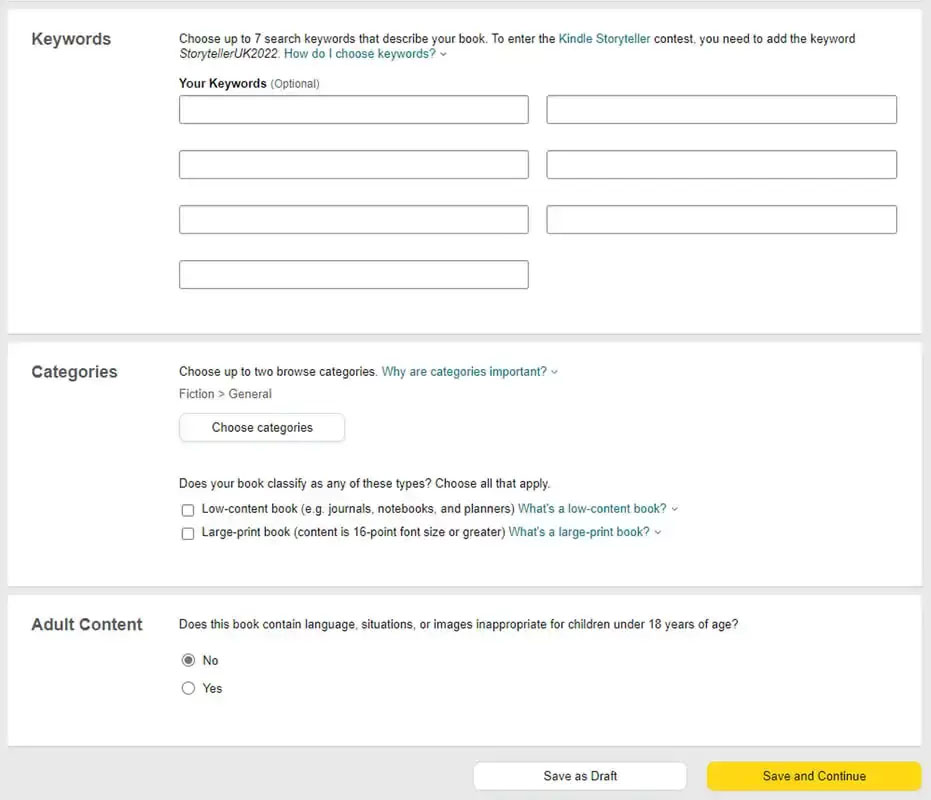
In your KDP dashboard, go to your book’s metadata page and scroll to the “Keywords” section. You’ll see seven boxes — use them wisely.
How to Choose Keywords That Rank:
-
Use Amazon’s search bar: Start typing your topic and note the autocomplete suggestions. Those are live searches from real shoppers.
-
Analyze top-selling competitors in your genre and look at the phrasing in their titles, subtitles, and descriptions.
-
Include synonyms and related phrases (“self-help for anxiety,” “mindfulness journal,” “how to stop overthinking”) to cast a wider net.
Pro Tip: Avoid repetition. If a word appears in your title or subtitle, don’t waste space repeating it in backend fields. Focus on adding new, relevant search terms.
3. Choosing the Right Categories for Visibility
Categories determine where your book appears on Amazon’s bestseller lists — and smart selection can dramatically improve your chances of ranking.
Start Broad, Then Niche Down.
When you publish, Amazon lets you choose two categories. Begin with general ones (like Romance or Self-Help) and then email KDP Support to request additional subcategories that match your book more precisely (e.g., Romantic Comedy or Self-Help for Anxiety Disorders). You can request up to 10.
Study the Competition.
Look at where the best-selling books in your genre rank. Aim for categories with moderate competition — where the #1 book has a Best Seller Rank between 2,000 and 10,000. These are competitive enough to have traffic but not so crowded that you’ll get buried.
Category + Keyword Synergy.
Make sure your keywords align with your chosen categories. If you pick Cozy Mystery, include terms like “small-town mystery,” “female sleuth,” or “bookshop mystery” in your backend keywords. Amazon’s algorithm rewards consistency.
4. Putting It All Together: Optimize for Reach and Profit
Once your pricing, keywords, and categories are in harmony, your book becomes algorithm-friendly. You’ll appear in more search results, attract organic traffic, and start generating real sales — even without ads.
Here’s your checklist:
-
✅ Start your ebook at a reader-friendly price to build traction
-
✅ Add keyword-rich metadata for discoverability
-
✅ Select high-traffic, low-competition categories
-
✅ Track and adjust your strategy every few weeks
Early optimization is the foundation of long-term success. When done right, your book continues to sell while you focus on writing the next one.